Cheque Bounce in India: Section 138 NI Act Complete Guide (2026)
Complete guide to cheque bounce cases in India — Section 138 NI Act elements, timelines, landmark Supreme Court cases, jurisdiction rules, and step-by-step process from dishonor to conviction.
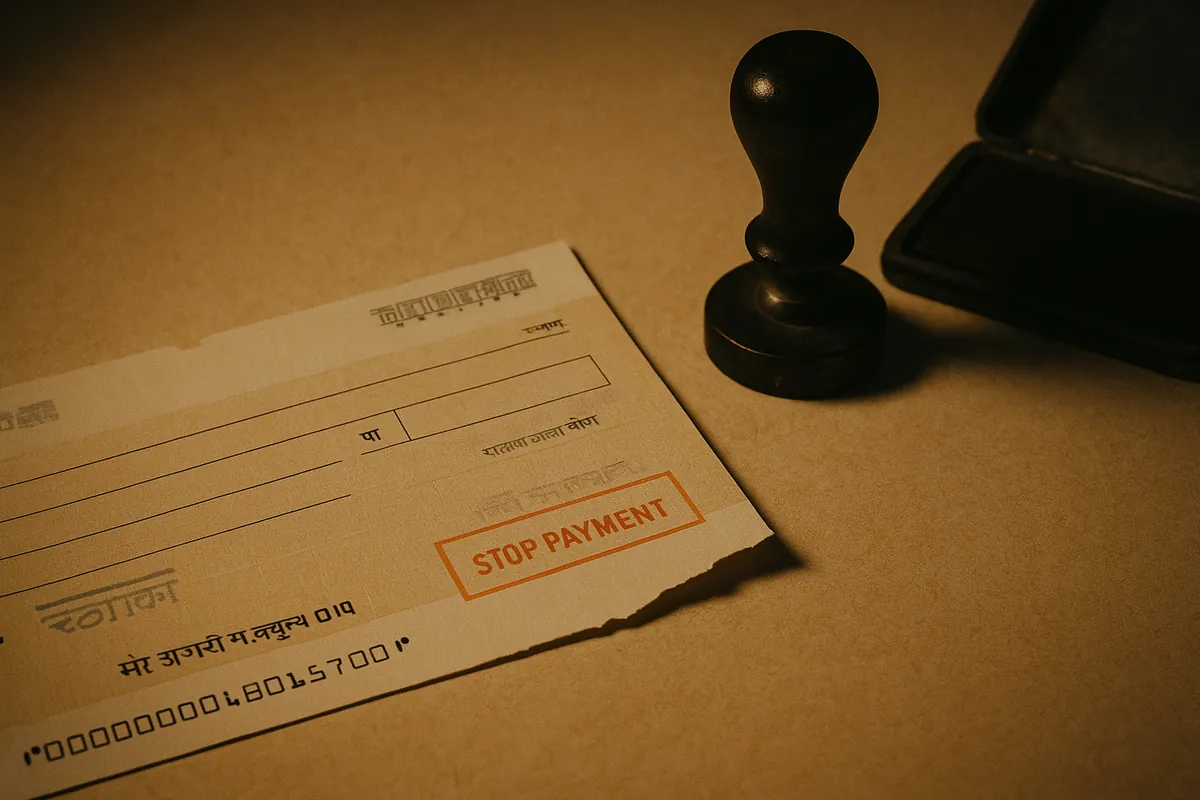
Cheque bounce cases account for nearly 40% of all pending criminal cases in Indian district courts. With over 35 lakh cases clogging the system at any given time, Section 138 of the Negotiable Instruments Act, 1881 (NI Act) is arguably the most litigated criminal provision in India after road accidents.
If you are a lawyer handling cheque bounce matters — or a client whose cheque was dishonored — this guide covers everything: the law, the timeline, jurisdiction, landmark cases, defences, and the impact of recent legislative changes.
1. What is Cheque Bounce Under Section 138 NI Act?
Dishonor of a cheque occurs when the drawee bank returns a cheque unpaid. Section 138 of the Negotiable Instruments Act, 1881 criminalises this dishonour under specific conditions.
Before the NI Act amendment of 1988, cheque bounce was purely a civil matter. Parliament elevated it to a criminal offence to restore confidence in the cheque as a payment instrument — a critical policy goal in a cash-heavy economy transitioning toward banking.
Why Is It a Criminal Offence?
The legislature recognised that cheques are promises. Issuing a cheque knowing that funds are insufficient is tantamount to a dishonest act. Making it criminal (with real imprisonment risk) deters misuse and protects payees from bad-faith issuances.
Punishment Under Section 138
On conviction, the drawer is liable to:
- Imprisonment up to 2 years, or
- Fine up to twice the amount of the cheque, or
- Both
The court also has power to grant compensation to the complainant under Section 357 CrPC (now Section 395 BNSS).
Tip: Use LawCentral's Cheque Bounce Calculator to instantly compute the maximum fine, limitation dates, and notice deadlines for any cheque dishonour scenario.
2. Five Essential Elements — All Must Be Satisfied
Section 138 is a penal provision and is construed strictly. All five elements must be present for a complaint to succeed. Miss even one, and the case fails.
Element 1: Cheque Drawn for Discharge of a Legally Enforceable Debt or Liability
The cheque must have been issued for the discharge, in whole or in part, of any debt or other liability. This is the cornerstone element.
- What qualifies: Repayment of a loan, payment for goods delivered, professional fees, rent, contractual dues, credit card debt.
- What does NOT qualify: Gifts, donations, cheques given as security (per many HC rulings, though this is contested), payments for illegal purposes (e.g., gambling debts).
The complainant must prove that the drawer owed a legally enforceable debt. If the debt itself is illegal, unenforceable, or does not exist, Section 138 does not apply.
Section 139 NI Act creates a presumption in favour of the holder — it is presumed that the cheque was issued for a legally enforceable debt. The burden then shifts to the drawer to rebut this presumption.
Element 2: Cheque Presented to Bank Within Validity Period
The payee must present the cheque to their bank within its validity period:
- Post-2016: 3 months from the date on the cheque (RBI Circular 2012, effective from April 1, 2012 — validity reduced from 6 months to 3 months)
- Pre-2012: 6 months from the date on the cheque
If the cheque is presented after the validity period expires, the bank will return it as "stale cheque" — this dishonour does not attract Section 138 liability.
Post-dated cheques are presented on or after the date written on them. The 3-month validity runs from the date on the cheque face, not the date of issue.
Element 3: Cheque Dishonoured / Returned by Bank
The cheque must actually be dishonoured and the bank must issue a return memo stating the reason for dishonour. Common reasons:
| Return Reason | Section 138 Applies? |
|---|---|
| Insufficient funds | Yes |
| Account closed | Yes |
| Payment stopped by drawer | Disputed (see Section 8 below) |
| Signature mismatch | Yes (in most HCs) |
| Refer to drawer | Yes |
| Amount in words and figures differ | Yes |
| Cheque mutilated / torn | No (not dishonour per se) |
| Post-dated, presented before date | No |
| Account frozen by court order | Disputed |
The return memo is the starting gun — it triggers the 30-day notice window.
Element 4: Payee Sends Written Demand Notice Within 30 Days
Within 30 days of receiving the bank's return memo (not the date of dishonour — the date you receive the memo), the payee must send a written demand notice to the drawer asking for payment.
- The notice must be in writing (email alone has been contested; RPAD + Speed Post is safest)
- It must demand the cheque amount within 15 days
- It should identify the cheque by date, number, and amount
- Send to the correct address of the drawer — incorrect address is fatal
Generate your Section 138 demand notice instantly using LawCentral's Legal Notice Generator. The tool creates a court-ready notice with all mandatory fields pre-filled.
Mode of service: Registered Post with Acknowledgment Due (RPAD) is standard practice. Keep the postal receipt and the AD card. If the drawer refuses to accept or the notice is returned undelivered, service is still deemed complete under Section 27 of the General Clauses Act — K. Bhaskaran v. Sankaran Vaidhyan Balan (1999) 7 SCC 510 affirmed this.
Element 5: Drawer Fails to Pay Within 15 Days of Receiving Notice
After the drawer receives the notice, they have 15 days to make payment. This is the "make good" window Parliament built in — a last chance before criminal liability crystallises.
- If the drawer pays within 15 days: offence is not complete, no criminal complaint lies
- If the drawer pays after 15 days but before complaint: the complaint may still be filed, but compounding becomes relevant
- If the drawer pays nothing: the offence is complete and the payee can file a complaint
3. Step-by-Step Process with Timeline
The Section 138 process has strict deadlines. Missing any deadline kills the case.
Timeline Table
| Day | Event | Action Required |
|---|---|---|
| Day 0 | Cheque dishonoured, bank issues return memo | Obtain the return memo from your bank immediately |
| Day 0–30 | 30-day notice window | Draft and send demand notice via RPAD + Speed Post |
| Day 1–5 approx | Notice in transit | Track delivery; keep postal receipt |
| Day 2–7 approx | Notice received by drawer | 15-day payment window begins |
| Day 17–22 approx | 15-day payment window expires | If no payment, offence is complete |
| Day 17–52 approx | 30-day complaint window opens | File criminal complaint u/s 138 within 30 days of 15-day window expiry |
| Day 52 max | Complaint must be filed | Last date to file complaint (30 days after 15-day window closes) |
Worked Example
- January 5, 2026: Cheque for ₹5,00,000 dated January 5, 2026 deposited
- January 7, 2026 (Day 0): Bank returns cheque; return memo received
- January 10, 2026 (Day 3): Demand notice sent via RPAD + Speed Post
- January 13, 2026 (Day 6): Drawer receives notice (delivery confirmation)
- January 28, 2026 (Day 21): 15-day window expires — no payment received
- January 28 to February 27, 2026: 30-day window to file complaint
- February 27, 2026 (Day 51): Last date to file criminal complaint
If you miss the Day 30 notice window or the 30-day complaint filing window, the magistrate will likely take cognisance on a delay-condoned basis only if you show sufficient cause. Courts have been strict on limitation since Yogesh Upadhyay v. Atlanta Limited (2013) 6 SCC 369.
What to File in the Complaint
The complaint (filed as a private complaint before the Judicial Magistrate First Class or Metropolitan Magistrate) should attach:
- Original dishonoured cheque
- Bank's return memo
- Copy of demand notice
- Proof of service (postal receipt + AD card / tracking report)
- Affidavit of complainant
- Proof of debt/liability (agreement, invoice, ledger, etc.)
The Magistrate takes cognisance under Section 190 CrPC (Section 210 BNSS), issues summons, and the matter is listed for trial — typically conducted as a summary trial under Section 143 NI Act (expedited procedure).
4. Landmark Supreme Court Cases
Dashrath Rupsingh Rathod v. State of Maharashtra (2014) 9 SCC 129
Facts: The Supreme Court was called upon to settle where a Section 138 complaint should be filed — the payee's city or the drawee (payer's) bank's city.
Held: Jurisdiction lies where the drawee bank (drawer's bank) is located — i.e., where the cheque was presented for clearing. This created enormous hardship for payees in different cities.
Legislative response: Parliament amended Section 142 NI Act in 2015 (The Negotiable Instruments (Amendment) Act, 2015) to provide that complaints shall be filed where the payee's bank is located — effectively overruling Dashrath Rupsingh prospectively.
Significance: Understanding this case explains why the 2015 amendment was necessary and how jurisdiction analysis flows.
Meters and Instruments Private Limited v. Kanchan Mehta (2018) 1 SCC 560
Facts: The Supreme Court took suo motu cognisance of the backlog of Section 138 cases across India (over 38 lakh at the time).
Held / Directions:
- Section 138 cases should be tried as summary trials under Section 143 NI Act
- Courts may use video conferencing for examination of accused to reduce adjournments
- Courts should decide cases within 6 months of filing
- Processes, summons, and notices can be served electronically
Significance: This case is the foundation for expeditious disposal guidelines and permits electronic service of process in Section 138 matters.
Surinder Singh Deswal v. Virender Gandhi (2019) 11 SCC 341
Facts: Post the 2015 amendment, the question arose whether complaints filed before the amendment at the drawee bank's location should be transferred to the payee bank's location.
Held: The 2015 amendment operates prospectively. For complaints filed before the amendment, courts retain jurisdiction under the pre-amendment position (Dashrath Rupsingh). For complaints filed after the amendment, jurisdiction lies at the payee bank's branch.
Significance: Clarified the transitional jurisdictional position and confirmed that the payee bank branch is the correct forum post-2015.
In Re: Expeditious Trial of Cases Under Section 138 of NI Act (2021) 6 SCC 323
Facts: The Supreme Court took up the issue of delays in Section 138 trials yet again, noting that pendency had not reduced despite earlier directions.
Directions:
- High Courts must prepare and implement action plans for disposal of Section 138 cases
- Cases where accused have been on bail for over 2 years with trial not concluded should be given priority
- Mediation should be explored in all Section 138 matters before trial begins
- Monthly reporting by High Courts to the Supreme Court
Significance: This is the most recent judicial push for speedy disposal and has prompted several High Courts to constitute dedicated NI Act courts.
Yogesh Upadhyay v. Atlanta Limited (2013) 6 SCC 369
Facts: Question of limitation — when does the 30-day window to file a complaint begin?
Held: The 30-day limitation for filing a complaint begins from the date on which the cause of action arises — i.e., the day after the 15-day period for the drawer to pay expires. Limitation is to be computed under the Limitation Act, 1963.
Significance: Confirms the exact calculation of limitation. Delay beyond the 30-day window requires condonation under Section 142(b) NI Act read with Section 5 of the Limitation Act (showing "sufficient cause").
5. Jurisdiction — Where to File the Complaint
Jurisdiction has been the most litigated procedural issue in Section 138 cases. Here is the settled position:
Post-2015 Amendment (Current Law)
Section 142(2) NI Act (as amended) provides:
"The offence under section 138 shall be inquired into and tried only by a court within whose local jurisdiction the bank branch of the payee, where the payee presents the cheque for payment, is situated."
Translation: File the complaint in the city/district where your bank branch (the payee's bank) is located. This is where you deposited the cheque for clearing.
Key Points on Jurisdiction
- Multiple cheques: Each dishonoured cheque is a separate cause of action. All complaints for cheques payable through the same payee bank branch can be clubbed.
- Different payee banks: If you have cheques from the same drawer deposited in different branches, separate complaints may need to be filed in different jurisdictions.
- Transfer petitions: If the accused faces hardship, they may apply for transfer under Section 407 CrPC (Section 442 BNSS) — courts apply a balance of convenience test.
- Pre-2015 complaints: These continue in the court of original jurisdiction (drawee bank's location per Dashrath Rupsingh).
6. Compounding of Offence — Section 147 NI Act
Section 147 NI Act expressly provides that every offence punishable under the NI Act shall be compoundable. This is a critical feature that distinguishes Section 138 from most criminal offences.
How Compounding Works
- The complainant and accused agree on a settlement amount
- They jointly approach the court and inform it of the settlement
- The court records the settlement and acquits the accused
- The complainant cannot challenge the acquittal later
When Can It Be Compounded?
Compounding can happen at any stage of the proceedings — before trial begins, mid-trial, at the appellate stage, or even in revision. The Supreme Court in Damodar S. Prabhu v. Sayed Babalal H. (2010) 5 SCC 663 held that:
- If compounded at the pre-summoning stage: no costs
- If compounded after summoning but before conviction: costs up to 10% of cheque amount may be imposed
- If compounded after conviction: costs up to 15% may be imposed
Practical Advantages of Compounding
For the complainant:
- Guaranteed recovery (settlement amount agreed upfront)
- Avoids years of litigation
- Certainty over a distant conviction and uncertain fine
For the accused/drawer:
- Clean record — acquittal, not conviction
- No imprisonment risk
- Lower total payout than contested litigation costs
Lawyer's tip: In most Section 138 matters, the goal is recovery, not conviction. A well-timed demand notice — drafted with clarity — often produces payment before the complaint stage. Use LawCentral's Legal Notice Generator to create a compelling, court-ready demand notice.
7. Interim Compensation — Section 143A NI Act
Section 143A was inserted by the Negotiable Instruments (Amendment) Act, 2018 to address the accused's tactic of prolonging trial to delay payment.
What Is Section 143A?
The court may order the drawer to pay interim compensation to the complainant during the pendency of the trial. This is a discretionary power — "may" not "shall."
Quantum: Up to 20% of the cheque amount
When Can It Be Ordered?
- At the time of framing of charges (or when the accused pleads not guilty)
- The court considers the facts and circumstances before ordering
What If the Accused Is Acquitted?
If the drawer is ultimately acquitted, the interim compensation paid must be refunded (with interest at bank rate) within 60 days of the acquittal order. The complainant must refund it.
Appellate Courts and Interim Compensation
Section 148 NI Act (also inserted in 2018) — when an appeal is filed against conviction, the appellate court shall order the appellant to deposit a minimum of 20% of the fine or compensation awarded by the trial court (in addition to Section 143A interim compensation, if any).
The Supreme Court in Surinder Singh Deswal v. Virender Gandhi confirmed these provisions are mandatory in appellate proceedings.
8. Common Defences — What the Drawer Can Argue
Defence 1: Notice Not Served / Served Late
If the demand notice was not sent within 30 days of the return memo, or was not delivered to the correct address, the mandatory pre-condition under Section 138(b) is not satisfied. The complaint becomes premature.
How complainants counter this: Maintain meticulous records of the postal receipt and AD card. Even returned/refused notices are deemed served under Section 27 General Clauses Act.
Defence 2: Cheque Not for Legally Enforceable Debt
The drawer can rebut the Section 139 presumption by proving that the cheque was not issued for a legally enforceable debt — for example, it was issued as a guarantee, for an illegal purpose, or under coercion.
Rebuttal standard: The accused must raise a "probable defence" — not prove beyond reasonable doubt, but cast reasonable doubt on the complainant's case.
Defence 3: Cheque Was Security / Blank Cheque
"The cheque was given as security and not for any existing debt" is a common defence. Courts have split opinions:
- Many courts hold that even security cheques attract Section 138 if the underlying liability exists
- The Supreme Court in Indus Airways Pvt. Ltd. v. Magnum Aviation Pvt. Ltd. (2014) 12 SCC 539 held that a cheque for future liability also falls within Section 138
The better view (post-Indus Airways): security cheques are covered if they represent a legally enforceable liability, whether present or future.
Defence 4: Stop Payment by Drawer
If the drawer issued a stop payment instruction before the cheque was presented, some courts treat this as equivalent to "insufficient funds" — dishonour is dishonour. Others have held that a deliberate stop payment cannot attract criminal liability.
The dominant view: stop payment instructions do attract Section 138 if the cheque was issued for a legally enforceable debt — the dishonour is intentional and falls within the mischief the provision targets.
Defence 5: Account Closed
Account closure is generally not a defence — it is treated as dishonour due to "insufficiency of funds" because the drawer knew no funds existed. Courts have consistently upheld Section 138 liability in account-closed cases.
Defence 6: Signature Mismatch
Courts are divided. Most High Courts hold that signature mismatch (as opposed to forged signature) is the drawer's responsibility and attracts Section 138. A forged signature, however, negates liability entirely since the drawer did not draw the cheque.
Defence 7: Drawer's Denial of Debt
A bare denial — "I don't owe this money" — is not sufficient to rebut the Section 139 presumption. The drawer must produce documents, ledgers, or credible testimony showing the debt does not exist.
9. BNS/BNSS Impact on Section 138 Cases
The Short Answer: NI Act Is Unchanged
The Bharatiya Nyaya Sanhita (BNS), 2023 replaced the Indian Penal Code. The Bharatiya Nagarik Suraksha Sanhita (BNSS), 2023 replaced the Code of Criminal Procedure.
The NI Act is NOT replaced by BNS. It is a special statute and continues in force independently. Section 138 to Section 147 NI Act remain exactly as they were.
Procedural Changes Under BNSS
While the substantive NI Act law is unchanged, procedural aspects now follow BNSS:
| Aspect | Old Law (CrPC) | New Law (BNSS) |
|---|---|---|
| Summary trial | Section 260–265 CrPC | Section 283–290 BNSS |
| Cognisance by Magistrate | Section 190 CrPC | Section 210 BNSS |
| Compounding | Section 320 CrPC | Section 359 BNSS |
| Compensation | Section 357 CrPC | Section 395 BNSS |
| Transfer of cases | Section 407 CrPC | Section 442 BNSS |
| Video conferencing | Section 273 CrPC | Section 530 BNSS (expanded) |
Section 143 NI Act (which provides for summary trial of NI Act cases) now cross-references BNSS provisions. The limitation period (30-day notice window, 15-day payment period, 30-day complaint window) is entirely under the NI Act — BNSS has no impact on it.
Electronic Records Under BNSS
Section 63 BNSS (formerly Section 65B IEA) governs electronic records. WhatsApp messages, emails, and digital bank statements used to prove dishonour and demand notice service must now comply with BNSS certification requirements. Practice tip: always back up digital evidence with traditional RPAD notices.
10. Practical Checklist for Lawyers
Before filing a Section 138 complaint, verify:
- Return memo obtained and dated
- Date of receipt of return memo confirmed (starts 30-day notice window)
- Demand notice sent within 30 days via RPAD + Speed Post
- Drawer's correct address used (match with cheque / agreement)
- Postal receipt and AD card preserved
- 15 days elapsed from deemed receipt date
- No payment received within 15 days
- Complaint filed within 30 days of 15-day period expiry
- Original cheque, return memo, notice copy, proof of service attached
- Proof of legally enforceable debt ready (agreement, invoice, bank statement)
- Complainant's affidavit prepared and notarised
- Correct court (payee bank's jurisdiction) identified
Frequently Asked Questions
Q: Can I file multiple complaints for multiple dishonoured cheques?
Yes. Each dishonoured cheque is a separate cause of action under Section 138. You must follow the notice-and-wait procedure for each cheque individually. All complaints can be filed in the same court if all cheques were deposited through the same payee bank branch.
Q: What if the drawer is a company?
Section 141 NI Act makes the company and every person who was in charge of and responsible for the conduct of the business of the company at the time of the offence liable. Directors, managers, and signatories can be arraigned. However, a director must be "in charge" — a non-executive/nominee director without day-to-day control may not be liable (National Small Industries Corporation v. Harmeet Singh Paintal, (2010) 3 SCC 330).
Q: Can Section 138 and civil suit run simultaneously?
Yes. A complainant may file both a Section 138 criminal complaint AND a civil suit for recovery of the cheque amount. These are independent remedies. The criminal case does not merge into the civil suit and vice versa.
Q: Is anticipatory bail available in Section 138 cases?
Yes. Since Section 138 is a bailable offence (maximum sentence 2 years), bail is generally granted as a matter of right. Anticipatory bail is also available, though courts may impose conditions including deposit of the cheque amount.
Q: What if the accused lives abroad?
Filing a Section 138 complaint against a person resident abroad is procedurally complex. Service of summons through the Ministry of External Affairs / diplomatic channels is required. The Supreme Court has permitted video conferencing for examination of NRI accused.
Conclusion
Section 138 NI Act is a powerful remedy — but one that demands strict adherence to timelines. Miss the 30-day notice window, use the wrong address, forget to collect the AD card, or file the complaint one day late, and a strong case unravels on procedural grounds.
The good news: with the right tools, this process is entirely manageable.
- Calculate your exact deadlines with the Cheque Bounce Calculator
- Draft a legally sound demand notice in minutes with the Legal Notice Generator
- Research supporting case law with LawCentral's AI Research tool
For deeper reading on legal drafting standards, see our guides on legal drafting for Indian lawyers and how to draft a legal notice step by step.
This article is for informational purposes only and does not constitute legal advice. Consult a qualified advocate for advice specific to your matter.
LawCentral Team
LawCentral India