Consumer Complaint in India: Complete Drafting and Filing Guide (2026)
Everything you need to know about filing consumer complaints in India — Consumer Protection Act 2019, online filing on e-Jagriti (formerly e-Daakhil), jurisdiction, format, relief available, and step-by-step process.
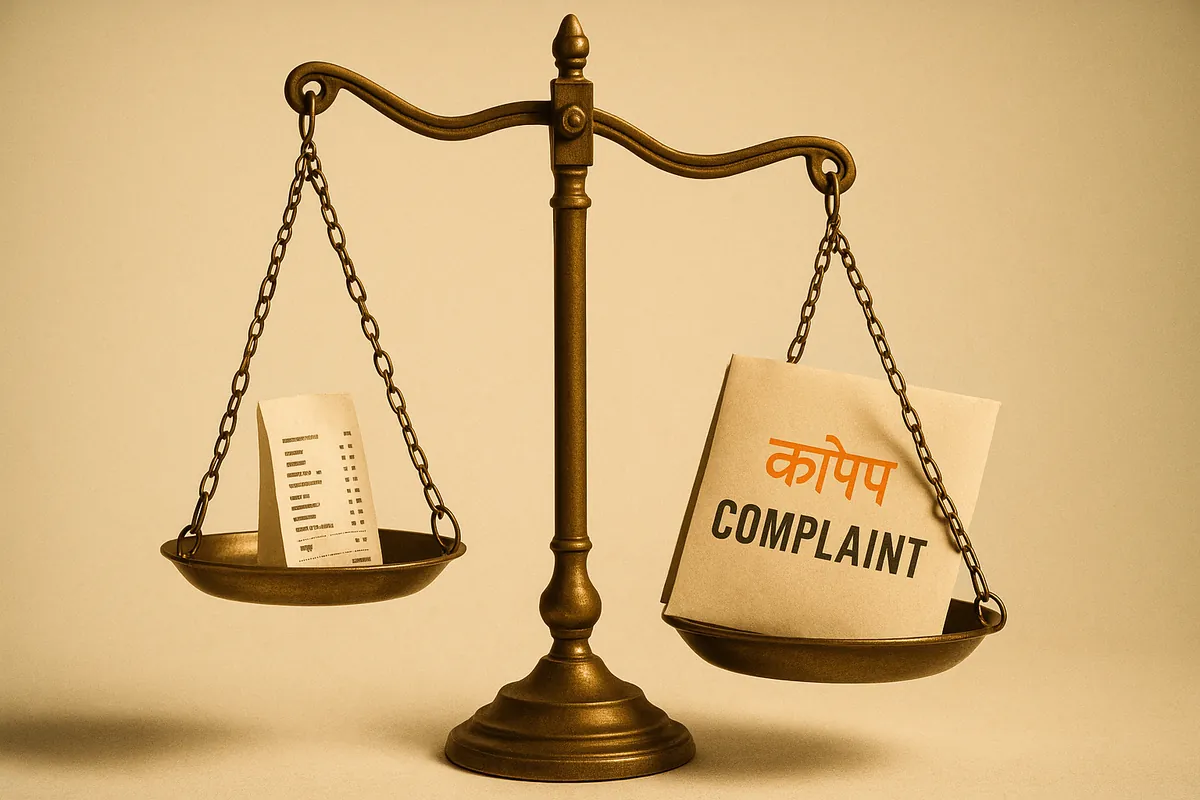
Consumer disputes are among the most common legal matters that ordinary Indians encounter — a defective phone that the seller refuses to replace, an insurance claim denied on a technicality, a flat handed over three years late, or a hospital charging for procedures never performed. The Consumer Protection Act 2019 exists precisely to give every consumer a fast, inexpensive, and accessible remedy.
This guide covers everything you need to know: who can file, what can be complained about, which forum has jurisdiction, how to file online, how to draft a winning complaint, and what relief you can realistically expect. Whether you are a lawyer advising a client or an individual filing on your own, this is the complete reference for 2026.
1. Consumer Protection Act 2019 — What Changed
The Consumer Protection Act 2019 replaced the Consumer Protection Act 1986, which had become outdated in the age of e-commerce, digital services, and complex product supply chains. The 2019 Act came into force on 20 July 2020 and introduced several landmark changes.
E-commerce is now explicitly covered. Online marketplaces, direct sellers, and sellers on platforms like Amazon, Flipkart, and Meesho are all defined as "sellers" or "service providers" under the Act. A consumer who buys a counterfeit product through an e-commerce platform has a direct remedy under the CPA 2019.
Product liability is a new chapter (Chapter VI) in the 2019 Act. A product manufacturer, product seller, or product service provider can be held liable for harm caused by a defective product — even if there is no negligence or fraudulent intent. This brings Indian law closer to strict liability standards used in the United States and European Union.
Central Consumer Protection Authority (CCPA) was established as a regulatory body with powers to recall products, impose penalties, and take suo motu cognizance of widespread consumer rights violations. The CCPA can also direct businesses to issue corrections for misleading advertisements.
Mediation is now a formal ADR option. Consumer Disputes Redressal Commissions can refer matters to mediation cells. If mediation succeeds, the settlement has the same force as a Commission order.
Revised pecuniary jurisdiction. The Act itself set the limits by value of consideration paid, and the Central Government revised them by rules in December 2021 (discussed in detail in the jurisdiction section below).
Complaints can be filed online (first through the e-Daakhil portal, now through e-Jagriti), removing the need to visit the Commission in person.
2. Who is a "Consumer" Under the CPA 2019
Definition
Under Section 2(7) of the Consumer Protection Act 2019, a consumer is any person who:
- Buys any goods for consideration (paid or promised), and includes any user of such goods with the buyer's approval; or
- Hires or avails of any service for consideration (paid or promised), and includes any beneficiary of such service with the hirer's approval.
The definition deliberately excludes a person who obtains goods for resale or for any commercial purpose. However, the commercial purpose exception has a carve-out: if an individual buys goods for self-employment to earn a livelihood, that is not a "commercial purpose," and the person remains a consumer.
Who Can File a Complaint
Under Sections 2(5) and 35 of the CPA 2019, a complaint can be filed by:
- The consumer themselves
- Any voluntary consumer association registered under any law
- The Central Government or any State Government
- The Central Consumer Protection Authority (CCPA)
- One consumer on behalf of numerous consumers having the same interest (class complaints)
- A legal heir or representative of a deceased consumer
Minors can file through their parent or legal guardian. Legal heirs can continue a complaint filed by a deceased complainant.
Who Can Be Complained Against (Opposite Parties)
A complaint can be filed against:
- The manufacturer of a defective product
- The seller who sold the defective product or provided deficient service
- The service provider (hospital, bank, insurer, builder, telecom company)
- The e-commerce platform as a direct seller, or the seller operating through the platform
3. Deficiency in Service, Defect in Goods, and Unfair Trade Practices
Defect in Goods
Section 2(10) of the CPA 2019 defines a defect as any fault, imperfection, or shortcoming in the quality, quantity, potency, purity, or standard of any goods, measured against what is required by any law, contract, express warranty, or the standard ordinarily expected by a consumer.
Examples: A washing machine that breaks down within 30 days of purchase. A car with a manufacturing defect in the braking system. A food product that contains undisclosed allergens. A medicine that falls below pharmacopoeia standards.
Deficiency in Service
Section 2(11) defines deficiency as any fault, imperfection, shortcoming, or inadequacy in the quality, nature, or manner of performance required by law or undertaken to be performed by a service provider.
Examples: A hospital that fails to maintain proper records. A bank that makes unauthorised deductions. An insurer that wrongly repudiates a valid claim. A builder who fails to deliver possession on the agreed date. An airline that cancels a flight without notice or compensation.
Unfair Trade Practices
Section 2(47) defines unfair trade practice broadly to include:
- Making false representations about the quality, grade, standard, or composition of goods or services
- Giving a warranty or guarantee of the performance, efficacy or length of life of a product that is not based on an adequate or proper test
- Offering gifts or prizes with the intention of not providing them as offered
- Manufacturing spurious goods or offering them for sale
Separately, charging a price above the price fixed by law or displayed on the goods or package (the MRP) is itself a ground of complaint under Section 2(6).
Restrictive Trade Practices
A restrictive trade practice (Section 2(41)) is one that tends to bring about manipulation of price or conditions of delivery or affects the flow of supplies in the market — for example, a dealer conditioning a car sale on the buyer also purchasing a specific insurance policy from a tied insurer.
4. Jurisdiction — The Three-Tier System
The CPA 2019 establishes a three-tier quasi-judicial structure for consumer dispute redressal.
Pecuniary Jurisdiction
| Forum | Value of goods or services paid as consideration |
|---|---|
| District Consumer Disputes Redressal Commission (DCDRC) | Up to Rs 50 lakh |
| State Consumer Disputes Redressal Commission (SCDRC) | Above Rs 50 lakh up to Rs 2 crore |
| National Consumer Disputes Redressal Commission (NCDRC) | Above Rs 2 crore |
These limits come from the Consumer Protection (Jurisdiction of the District Commission, the State Commission and the National Commission) Rules, 2021, notified on 30 December 2021. They replaced the Rs 1 crore / Rs 10 crore limits in Sections 34, 47 and 58 of the Act. The test is the consideration actually paid, not the compensation claimed.
Appeals lie from the District Commission to the State Commission, from the State Commission to the National Commission, and from the National Commission to the Supreme Court of India.
Territorial Jurisdiction
One of the most significant pro-consumer changes in the CPA 2019 is the expanded territorial jurisdiction. Under Section 34(2), a complaint can be filed before the District Commission within whose local limits:
- The opposite party ordinarily resides, or carries on business, or has a branch office, or personally works for gain; or
- The cause of action, wholly or in part, arose; or
- The complainant resides or personally works for gain (this is the new addition — not available under the 1986 Act).
The third option is a major improvement. It means a consumer in Bengaluru who purchases a defective product from a Delhi-based seller can now file the complaint in Bengaluru, without having to travel to Delhi or engage a lawyer there.
5. e-Jagriti (formerly e-Daakhil) — Online Filing System
What is e-Jagriti?
e-Daakhil was the online portal for filing consumer complaints before District Commissions, State Commissions, and the National Commission, launched by the NCDRC on 7 September 2020. Since 1 January 2025 it has been folded into e-Jagriti (e-jagriti.gov.in), the Department of Consumer Affairs' single platform for the Consumer Commissions. It allows consumers to file complaints, pay court fees, upload documents, and track case status — entirely online, without a physical visit to the Commission office.
Step-by-Step Filing Process
Step 1: Register on e-Jagriti Visit e-jagriti.gov.in and register as a complainant (or as an advocate if you are representing a client). You will need a valid mobile number and email address. OTP-based verification is required.
Step 2: Select the Commission After logging in, select the appropriate Commission based on the consideration paid and territorial jurisdiction. The portal lists all District Commissions state-wise and the State Commissions.
Step 3: Fill the Complaint Form The online form captures: complainant details, opposite party details, nature of complaint (goods defect / service deficiency / unfair trade practice), facts, relief sought, and cause of action date.
Step 4: Upload Documents Upload scanned copies of all supporting documents within the portal's file format and size limits. Documents include bills, warranty cards, correspondence, photographs, insurance policy documents, and any prior complaints made to the company.
Step 5: Pay Court Fee Online Court fees can be paid via net banking, UPI, or debit/credit card through the integrated payment gateway. The fee structure is described in the next section.
Step 6: Submit and Get Case Number On successful submission, the portal generates a complaint registration number. This number can be used to track the status of the complaint, receive notifications about hearing dates, and access orders passed by the Commission.
Advantages of online filing:
- No physical visit to the Commission office required
- Electronic tracking of case status at every stage
- Notices can be served electronically
- Significantly faster admission process compared to physical filing
- Available 24/7 — not restricted to court hours
6. Court Fee Structure
The fee is prescribed by Rule 7 of the Consumer Protection (Consumer Disputes Redressal Commissions) Rules, 2020, as amended in August 2023. It depends on the value of the goods or services paid as consideration.
District Commission Fees
| Value of goods or services paid as consideration | Fee |
|---|---|
| Up to Rs 5 lakh | Nil |
| Rs 5 lakh to Rs 10 lakh | Rs 200 |
| Rs 10 lakh to Rs 20 lakh | Rs 400 |
| Rs 20 lakh to Rs 50 lakh | Rs 1,000 |
State Commission Fees
| Value of goods or services paid as consideration | Fee |
|---|---|
| Rs 50 lakh to Rs 1 crore | Rs 2,000 |
| Rs 1 crore to Rs 2 crore | Rs 2,500 |
National Commission Fees
| Value of goods or services paid as consideration | Fee |
|---|---|
| Rs 2 crore to Rs 4 crore | Rs 3,000 |
| Rs 4 crore to Rs 6 crore | Rs 4,000 |
| Rs 6 crore to Rs 8 crore | Rs 5,000 |
| Rs 8 crore to Rs 10 crore | Rs 6,000 |
| Above Rs 10 crore | Rs 7,500 |
7. Format of a Consumer Complaint
A well-drafted consumer complaint should follow a clear, logical structure. You can use LawCentral's Consumer Complaint Generator to draft a professionally formatted complaint in minutes.
Essential Structure
1. Heading and Forum
Before the District Consumer Disputes Redressal Commission, [City]
Complaint Case No. _____ of 2026
2. Parties
- Complainant: Full name, address, phone number, email
- Opposite Party 1 (OP-1): Name of seller/manufacturer/service provider, registered address
- Opposite Party 2 (OP-2): If there are additional parties (e.g., both manufacturer and retailer)
3. Facts in Numbered Paragraphs
Present the facts in chronological order, in numbered paragraphs. Each paragraph should deal with one event or fact. Include:
- Date of purchase/transaction and invoice/order number
- Nature of goods or services purchased and the price paid
- The specific defect or deficiency observed, with date of first occurrence
- Steps taken to contact the opposite party (emails, calls, written complaints)
- Response (or non-response) from the opposite party
- How the complainant suffered loss, injury, or harassment
4. Deficiency or Defect with Evidence
Specifically identify which provision of the CPA 2019 is attracted — defect in goods (Section 2(10)), deficiency in service (Section 2(11)), or unfair trade practice (Section 2(47)). Reference the documentary evidence you are relying on.
5. Relief Claimed
List all reliefs being claimed, typically:
- Replacement of defective goods / refund of price paid with interest
- Compensation for physical, mental, and financial harm
- Costs of the complaint (legal fees, travel, time)
- Punitive damages (where applicable, for unfair trade practices)
- Discontinuance of unfair trade practice
6. Limitation
State the date of cause of action and confirm the complaint is within the two-year limitation period, or explain the delay if filing after two years.
7. Verification
A verification clause signed by the complainant confirming the truth of the contents of the complaint.
8. List of Documents
Attach and list all documents:
- Tax invoice / purchase receipt / e-commerce order confirmation
- Warranty card and warranty terms
- Photographs of the defective product or damaged goods
- All correspondence (emails, WhatsApp messages, letters) with the opposite party
- Insurance policy documents (if the complaint relates to insurance)
- Medical records and prescriptions (if the complaint relates to medical services)
- Bank statements showing unauthorized deductions (if the complaint relates to banking)
- Expert reports or test reports, if available
8. Common Types of Consumer Complaints
Product Defect (Electronics, Vehicles, Appliances)
Under Chapter VI (Product Liability) of the CPA 2019, a manufacturer can be held liable if the product suffers from a manufacturing defect, design defect, or inadequate instructions or warnings. Under Section 84(2), the manufacturer is liable even if it proves it was not negligent or fraudulent in making the express warranty. A brand-new television that fails within a week, or a motorcycle with a transmission defect, are clear cases for a District Commission.
Medical Negligence
The landmark Supreme Court ruling in Indian Medical Association v. V.P. Shantha (1995) brought medical services squarely within the Consumer Protection Act. Hospitals, clinics, nursing homes, and individual doctors who charge fees for their services are "service providers" under the Act. Complaints of medical negligence — wrong diagnosis, surgical errors, failure to inform the patient of risks (lack of informed consent), or inadequate post-operative care — are maintainable before Consumer Commissions.
Medical negligence under consumer law applies the standard of the reasonably skilled medical professional (the Bolam test). Courts also apply the doctrine of res ipsa loquitur — where the negligence is self-evident from the facts (e.g., a foreign object left inside a patient's body during surgery), the burden shifts to the hospital to explain the absence of negligence.
Insurance Claim Denial
Wrongful repudiation of insurance claims is one of the most litigated categories. Health insurers denying cashless treatment on procedural grounds, vehicle insurers citing fine-print exclusions, and life insurers repudiating claims on allegedly suppressed information are all classic cases. The Insurance Ombudsman is an alternative (and free) remedy, but the Consumer Commission offers broader relief including compensation for mental agony.
Banking and Financial Services
Unauthorized deductions from bank accounts, failure to process loans, wrongful CIBIL entries, forged signatures on cheques, and mis-selling of insurance products disguised as fixed deposits — all constitute deficiency in service by the bank. The Reserve Bank – Integrated Ombudsman Scheme, 2026 (which replaced the 2021 Scheme from 1 July 2026) is a free alternative route, but its awards are capped; Consumer Commissions are not bound by those caps.
Real Estate and Construction Delays
Builders who fail to deliver possession on the promised date, fail to provide amenities, or collect money without registering the flat under RERA are a major category. While the Real Estate (Regulation and Development) Act 2016 (RERA) and Consumer Protection Act overlap significantly, the Supreme Court has held that the remedy under the Consumer Protection Act is in addition to the RERA remedy, and that Section 79 of RERA does not bar a consumer complaint (Imperia Structures Ltd. v. Anil Patni, (2020) 10 SCC 783). The homebuyer may choose the forum.
E-Commerce Issues
Fake products listed on online marketplaces, non-delivery after payment, refusal to process returns within the stated policy, and hidden charges are all covered under the CPA 2019. The 2019 Act and the Consumer Protection (E-Commerce) Rules 2020 together impose disclosure obligations on e-commerce platforms, mandate a grievance officer, and require conspicuous display of country of origin.
9. Relief Available Under the CPA 2019
Under Section 39 of the Consumer Protection Act 2019, a Consumer Commission can direct:
- Removal of defects from the goods
- Replacement of the defective goods with new goods of the same description
- Return of the price paid with interest as the Commission may determine
- Compensation for any loss or injury suffered by the consumer, including injury, loss of time, mental agony, and inconvenience
- Removal of deficiency in service
- Discontinuance of unfair trade practice or restrictive trade practice and directing the opposite party not to repeat it
- Withdrawal of hazardous goods from sale
- Adequate costs to the parties
- Punitive damages — the proviso to Section 39(1)(d) lets the Commission award these in such circumstances as it deems fit
- Corrective advertisement — where misleading advertising was the root cause, the Commission can direct the opposite party to issue a corrective advertisement at its own expense
10. Limitation Period
Under Section 69 of the CPA 2019, a consumer complaint must be filed within two years from the date on which the cause of action arose.
The cause of action arises on the date of:
- Discovery of the defect in goods
- Refusal by the service provider to rectify the deficiency
- Repudiation of the insurance claim
- Date by which possession was to be given (for builder complaints)
Where the complaint involves a continuing cause of action (e.g., a recurring unauthorized deduction by a bank every month), the limitation period runs fresh from each occurrence.
Condonation of delay is available under Section 69(2). If the complainant satisfies the Commission that there was "sufficient cause" for the delay, the Commission may entertain the complaint even after the two-year period. The proviso to Section 69(2) requires the Commission to record its reasons for condoning the delay.
11. Key Case Law
Indian Medical Association v. V.P. Shantha, (1995) 6 SCC 651
This is the foundational judgment bringing medical services under the Consumer Protection Act. The Supreme Court held that a doctor or hospital rendering services for payment is a "service provider" under the Act, and a patient paying for treatment is a "consumer." Services rendered free of charge or under a contract of personal service are excluded. The ruling opened Consumer Forums to medical negligence complaints across India.
Lucknow Development Authority v. M.K. Gupta, (1994) 1 SCC 243
The Supreme Court held that a housing authority — whether public or private — is a "service provider" when it sells housing plots or constructs flats. Delay in handing over possession of a house or flat is a clear "deficiency in service" under the Consumer Protection Act. The Court also recognized the right to compensation for mental agony caused by a builder's delay or breach. This judgment remains the cornerstone of all real estate consumer disputes.
Spring Meadows Hospital v. Harjol Ahluwalia, (1998) 4 SCC 39
The Supreme Court upheld compensation awarded to the parents of a child who suffered brain damage due to medical negligence at the hospital. The Court held that parents are "consumers" with respect to services availed for their minor child, and that they can claim compensation for their own mental anguish and suffering over and above the compensation for harm to the child. This expanded the class of persons who could seek relief under consumer law in medical negligence cases.
Draft Your Consumer Complaint Online
Writing a consumer complaint that sets out facts clearly, identifies the deficiency correctly, and claims the right reliefs in the right format is the difference between a complaint that gets admitted quickly and one that gets returned with objections.
LawCentral's Consumer Complaint Generator generates a professionally formatted consumer complaint based on your inputs — parties, facts, deficiency type, and relief claimed. You can edit the generated draft in our document editor before downloading or printing.
For lawyers who regularly handle consumer matters, LawCentral's AI legal research tools can quickly surface the relevant NCDRC and Supreme Court precedents for any specific fact pattern, saving hours of manual search across the consumer law corpus.
Related Reading
LawCentral Team
LawCentral India